We are our sisters’ keepers: Refuge X Sistah Space Q&A
“You asked earlier about the kinds of abuse Black women go through. The answer is: everything. Everything and more. And much of it we don’t talk about.”
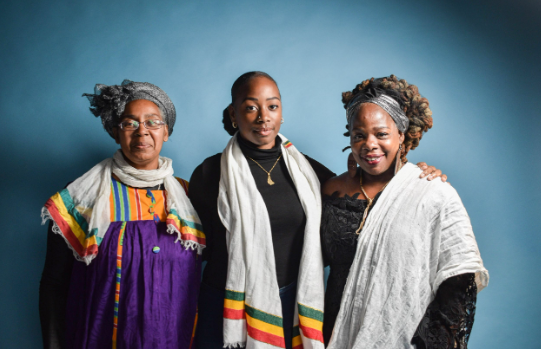
This Black History Month, Refuge sat down Sistah Space’s CEO and founder, Ngozi Fulani, and Senior Independent Domestic Violence Advisor, Rose Lewis.
Sistah Space is a vital grassroots organisation supporting African and Caribbean heritage women and girls who have survived domestic abuse. From gaps in survivor services to the often overlooked issue of elder abuse, we explored the urgent challenges Black women face. United by our mission to support survivors and eradicate domestic abuse, Refuge heard Sistah Space’s powerful message loud and clear. It’s only right that this message is echoed far and wide.
Trigger warning – some readers may find this content upsetting as themes include domestic abuse, child abuse and sexual assault.
Joyce (Refuge): So, the theme for Black History Month this year is standing firm in power and pride. Can you tell us about one example of when this theme really resonated within your work at Sistah Space?
Rose (Sistah Space): We’re very proud and very firm in power about our achievements at Sistah Space. We’ve been going for 10 years now.
One of our key accomplishments is Valerie’s Law. Valerie was a young woman who, along with her daughter, was tragically murdered by her partner. In response, we advocated for mandatory cultural competency training for professionals who are working with Black women experiencing domestic abuse. This training emphasises both the differences and similarities in experiences, highlighting the importance of intersectionality.
We’ve successfully trained numerous organisations, including the police and medical professionals.
Another major achievement is the establishment of a refuge for Black women, run by Black women and designed to be culturally appropriate. Black women often must repeatedly explain their needs – whether it’s language, food, or other cultural considerations. This refuge aims to meet those needs directly.
We also take pride in involving women in everything we do – from research to representation. We bring them into spaces where they’re not usually invited, ensuring their voices are heard at decision-making tables in the domestic abuse sector.
Our work includes powerful short documentaries about Black women’s experiences with domestic abuse. One of our recent films, Hidden in Plain Sight, focuses on how bruising is perceived differently by authorities and sheds light on the disparities in treatment.
Joyce: You mentioned that you’ve provided support around Valerie’s Law, particularly in relation to Valerie Forde’s case. However, we know that many Black women experience similar treatment from statutory services.
Could you tell us more about the law itself, and also share some of the other barriers you’ve observed when Black women try to access support for domestic abuse?
Rose: When we talk about barriers, they are truly unprecedented. Everyone working in the violence against women and girls’ (VAWG) sector has stories to tell but for Black women, the challenges are often 10 times worse.
The first barrier is being ignored or dismissed. Black women are frequently not taken seriously. Stereotypes play a huge role, people assume you’re strong, that you’re not really affected, especially if you’re not visibly emotional. If you’re composed, you’re seen as aggressive. If you speak up, you’re told you’re shouting. These perceptions mean professionals often miss the urgency and the real needs of the woman in front of them.
Reporting is another major issue. Many Black women don’t report abuse to the police. There’s a deep historical mistrust there, rooted in lived experience. Even when women want the abuse to stop, they’re forced to weigh that against the potential consequences for the perpetrator, especially if he’s a Black man or their Black son, of what might happen to them in police custody.
These barriers to this conflict are layered with intersectional issues that are always present.
Then there are immigration issues. Things have become much worse, especially for women with no recourse to public funds. These women are left with very few options and even fewer protections.
One of the biggest issues is where women seeking support are sent. Often, they’re moved far away from their communities – not just to a nearby borough, but sometimes as far as Dover or beyond, where there’s nothing familiar. No access to religious support, no culturally appropriate food, no hair care or skin products. In some cases, they may be the only Black person in the entire village. And this isolation extends to their children too.
Many women don’t even know that refuges exist. And for those with three or more children, it’s incredibly difficult to find space. On top of that, most refuges don’t accept male children over a certain age. So, they stay where they are. Because no mother wants to leave her 13 or 14-year-old son behind.
Joyce: What impact have you seen your work have with African and Caribbean women and professionals in the sector?
Rose: First and foremost, they know there is someone out there for them. There is an organisation that is constantly advocating, constantly putting information out there, and making sure their voices are heard.
Women now feel empowered to report. They can talk to someone and truly be themselves. They can speak their language, use their slang, laugh, cry – whatever they need to do. And they don’t have to keep explaining what they mean, which can be exhausting. This has given women a real sense of confidence.
We’re also seeing older women – those aged 50 and above, even into their 80s – coming forward. Many of them have never spoken to anyone about their experiences before. Now, they know there’s someone they can turn to.
At Sistah Space, we tell it like it is. That honesty is powerful. We speak truthfully about what’s going on. We’ve been invited to many tables – and we’ve invited ourselves to a few as well.
The impact has been huge.
Joyce: What research or public policy advocacy work are you currently involved in?
Ngozi (Sistah Space): We’ve made a lot of headway but there’s still so much more to do. Rose, you mentioned earlier that we’ve been invited to many tables. The truth is, we’ve had to bulldoze our way into a lot of those spaces. These policies are supposed to be made to support everybody equally well, but it’s not possible to devise a policy if you don’t understand everybody’s different issues when it comes to Black, African and Caribbean heritage women.
Historically, our story has been one where anyone else could sit at the table and speak on our behalf. But you can’t speak about what you don’t know.
That’s why our policies are rooted in making sure people understand that they don’t understand. Yes, we’ve ruffled a few feathers by saying we want to speak directly to Black women affected by domestic abuse and not under the label of BAME (Black, Asian, and Minority Ethnic).
One of our core policies is to ensure policies are designed specifically for Black women. And the only people who can decide what’s best for Black women are Black women.
Recently, we conducted a survey with over 2,200 respondents. The results were staggering: 97% of Black women said they wouldn’t report domestic abuse.
Changing policy means we have to ask: who’s making decisions about us, without us? That’s why we encourage everyone to visit our website, download our latest report, and watch the videos Rose mentioned earlier. They tell our story from our own perspective.
Joyce: Can you tell us about the forms of abuse that you observe Black women experiencing and the barriers they face in being understood and receiving adequate support?
Ngozi: First of all, we’ve found that many Black women don’t always realise they’re being affected by domestic abuse. There’s a history and a culture of being so used to certain behaviours that we begin to think it’s normal.
For example, the Windrush generation faced blatant racism. If they were affected by domestic abuse, they couldn’t go to mainstream services. They were laughed out of police stations. There were no agencies like the ones we have now.
There’s also a deep-rooted community culture of self-blame. Women would say, “It’s my fault. I didn’t make dinner on time. I upset him.” And when it comes to rape and sexual assault, there’s this belief that if you’re married, or have children with someone, or have been with them a long time, they’re entitled to access your body whenever they want. Even if you say no.
Rose: Elder abuse is off the chain, because most of the time there’s just not enough talk about it. It often seems like everything is fine. There’s this idea we hold in our community that we don’t put our elderly in care homes. So, people assume they’re being looked after well, either by their children, relatives, or even the state.
But that’s a myth.
The truth is, elders are being abused by their children, by their grandchildren, and sometimes by others. You asked earlier about the kinds of abuse Black women go through. The answer is: everything. Everything and more. And much of it we don’t talk about.
Being abused by your own children is something that’s hard to even comprehend. But it’s happening. That comes with shame, embarrassment, and all the emotions that make it even harder to speak out.
Ngozi: And when we talk about abuse from our children, let’s be clear we’re talking about adult children. That abuse can take many forms: financial, emotional, and yes, even sexual abuse. Would you believe it? Some women have experienced abuse from as young as five, six, or seven years old, and it continues. It happens inside the home, and it stays inside the home.
Right now, we’re conducting research that looks at the experiences of those who were born here in the UK versus those who came from the Caribbean or Africa to join children who were already here. What we’re seeing is there’s a real discrepancy. There’s tension, a lack of connection, and often conflict between those who’ve come from abroad and the children they’ve joined.
There’s a hostility in the house that is sometimes missed by the adults. So young people are traumatised, terrorised, physically, sexually abused inside the home. They can’t say anything. They can’t do anything. If they tell the parent, the parent doesn’t believe them and then they get beaten and the perpetrator, who lives in the house, will come back and beat them too. Sometimes at seven or eight or younger, you don’t even know what it is that’s happening to you. You’re just terrified in your house.
We’ve seen it too many times, heard it too many times. Many Black women either being murdered, committing suicide, or institutionalised because of the pressure.
Rose: Another form of abuse we don’t talk about enough is spiritual abuse; it’s often dismissed. It makes people retreat into themselves. When someone says, “This person is doing this,” or “They’re sprinkling something,” or “They’ve put up a talisman,” the first question is always, “Where’s your proof?”
And when you do try to report it, it’s dismissed – most of the time. That dismissal is damaging. It silences people even further.
Ngozi: It’s not just dismissed; you’ll be laughed at. The whole idea of spirituality is often ridiculed. People will either mock you or suggest you need to be put in a mental institution.
Rose: It all goes back to stereotypes. It goes back to faith. Even the way someone looks can be a barrier. If you’re Muslim for example, and wearing a hijab, niqab, or other veil, you’re already at a disadvantage before you even speak. First, you’re of African heritage. You’re Black. That’s the first layer. Then comes your attire, your religious identity.
That’s why the work we’ve done is so important. Because now, when women hear about us, they know there is somewhere they can go. There is someone they can speak to. And they know it’s OK, even if there’s conflict within themselves about it.
Joyce: What’s one action you would suggest to Refuge to ensure we are considering intersectionality in our services and advocacy work for survivors of domestic abuse?
Rose: I want to encourage not just Refuge, but anybody, any organisation, any individual to get in touch with us.
That’s the first thing: go to the people who are specialists in their field, in their area. That way, you’re getting the correct information, and you’re not continuing the cycle of assuming you know what’s best for the women.
We’ve got to unite that bit more.
And make a whole heap of noise so that the government and everybody else knows about it.
If we don’t talk about these things, if we don’t come together about these things, we’re stuck in that same system, that’s how it’s always been.
Ngozi: I would like everybody really to think carefully: What can I do? Look into your homes. Look into your friends. Look into your work colleagues. There are signs there – if you look for them – of somebody who may not be willing to speak immediately.
But I guarantee you will know somebody who’s going through domestic abuse at the moment –maybe they don’t realise it for what it is, or maybe they are too afraid or ashamed to speak. So, have your eyes and ears open.
Let people know that they don’t have to go through anything alone. And if you’ve got a concern, contact us – or another agency – if you suspect something. But if you know a perpetrator – and I know that you know them – if it’s your brother, your uncle, your next-door neighbour, your dad, your grandfather, or whatever, pull them up. And if you can’t, come and speak to us; we can help show you a way to do it. But we are our sisters’ keepers.
This is a transcript of a Q&A session with Sistah Space, hosted by Refuge and written up by Devyani Tailor. The views and opinions expressed in this article are those of the interviewees. We are so grateful to Rose and Ngozi for taking the time to share their message and work with us. To follow Sistah Space, go to www.sistahspace.org.